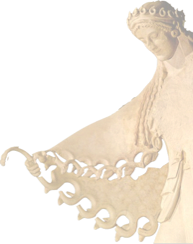
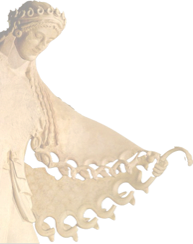
At the momentously decisive Council of Nikea in 325 AD, the demonic spirits of Apollo (Plato’s “interpreter of religion for all mankind”) and Athena (the goddess of mankind’s wisdom) made their presence known⏤Apollo through his worshipper Constantine, and Athena through her namesake philosopher/theologian Athanasius. Platonic enchantment became transmuted into Christian theology, negating implicit trust in the word of God and creating a means of accommodating unscriptural error. In sum, the prelates at the Council of Nikea, influenced by the powers of darkness, rendered unto Caesar the things that are God’s, and thus early Christianity turned into Christendom, becoming a power in the earth as the RCC.
THE DISPUTE AT THE COUNCIL OF NIKEA
Scripture: The ideal occupation of the mind is believing the declarations of God.
Plato: The ideal occupation of the mind is philosophical reasoning.
The dispute concerned whether God the Father created Jesus (said Arius), or whether He existed co-eternally and co-equally with the Father (said Athanasius).
Arius, a priest, who focused on the Scriptures, taught that Christ, because He was the Son of God, must have had a beginning and therefore must be a special creation of God. Further, if Jesus is the Son, the Father of necessity must precede Him; and more specifically, in Revelation 3:14, Jesus describes Himself as “the beginning of the creation of God,” and in John 3:16, God gives “His only-begotten Son” as the Saviour of the world. You would think that would mean case closed⏤but not when Platonic philosophy dominates Scripture.
Athanasius, a deacon from Egypt, had been totally immersed in the Platonism at the Alexandrian School and expected others to become immersed in it as well. He embraced an early form of trinitarianism wherein the Father and Son were separate and coequal, but also one at the same time, thus laying the groundwork for the development of the mysterious trinity doctrine and its ultimate expression as a riddle, taboo and threat as expressed in the Athanasian Creed.
The name Athanasius means Athana-like, and Athana is the original name of Athena, goddess of men’s wisdom. We should not be surprised that with Athanasius, philosophy outstrips Scripture. In his book, The Incarnation of the Word of God, Athanasius does not suppress his Platonic elitism:
But for the searching and right understanding there is need of a good life and a pure soul, and for Christian virtue to guide the mind to grasp, so far as human nature can, the truth concerning God the Word. One cannot possibly understand the teaching of the saints unless one has a pure mind and is trying to imitate their life (p. 96).
That short paragraph of Athanasius is replete with Platonic thinking and stands in stark contrast to Paul’s words in Ephesians 2: 8-10:
For in grace, through faith, are you saved, and this is not out of you; it is God’s approach present, not of works, lest anyone should be boasting. For His achievement are we, being created in Christ Jesus for good works, which God makes ready beforehand, that we should be walking in them.
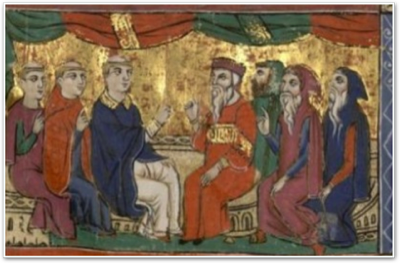
Constantine and Athanasius at the Council of Nikea, William of Tyre manuscripts c. 1184.
The representatives of Apollo and Athena confer.